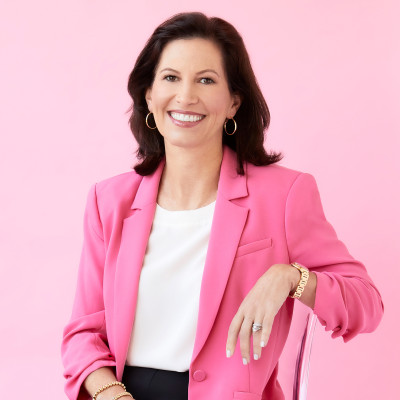
Global Head of Barbie Talks Brand Evolution, #Barbiecore and the Upcoming Movie
Barbie, a doll known in households universally for more than six decades, is having a moment.
Spurring that moment — and the transformation that has taken hold of the company behind the Barbie doll name — is Lisa McKnight, global head of Barbie and dolls and executive vice president at Mattel. McKnight runs the global Barbie brand, overseeing the product line, dolls and accessories; all communications and content; all of Barbie’s social impact work; partnerships with consumer products businesses; and digital gaming.
In an exclusive interview during last August’s Women in Retail and Total Retail Virtual Exchange, McKnight discussed how she’s led Barbie’s transformation and growth in the last 20 years, resulting in a more than $750 million increase in gross billings just over the past six years.
What resulted from that transformation is the Barbie we see on store shelves and online today — with several body types, dozens of skin tones and hundreds of hairstyles — but it wasn’t easy to get there.
Seven years ago, McKnight said her team was finding the Barbie brand wasn’t moving fast enough. They were, as McKnight put it, stuck in a bit of a rut.
“We weren’t evolving to reflect the world that kids were seeing around them, specifically,” noted McKnight.
The brand was getting “alarming” results from talking to parents who said they didn’t view Barbie — in its busty, thin and blond form — as a positive role model for their daughters.
“Some parents even said they didn’t want to give Barbie as a gift at a birthday party, which is a big blow,” McKnight said. “If parents weren’t going to endorse the brand in that way, it was concerning.”
McKnight said she and her team realized they had lost their way in Barbie’s true purpose: inspiring the limitless potential in girls. They knew the product needed to evolve. They heard the criticism about Barbie’s body not reflecting realistic beauty standards, and the brand’s head of design reimagined the doll’s body.
Fast-forward to today: Barbie has introduced a variety of skin tones, hairstyles and body types that feel more inclusive. The brand began to showcase real women role models as dolls — think Amelia Earhart, Florence Nightingale, Maya Angelou, and the brand’s latest, animal behavior expert and conservation activist Jane Goodall — and created content that goes beyond just the product.
Barbie’s products aren’t the only things that have evolved. McKnight said the brand’s advertising strategy traditionally focused on kids as well as highlighting features and benefits of the product. But Barbie’s also a multigenerational brand; many parents grew up with Barbie, and the brand is ubiquitous worldwide.
Therefore, Barbie began to follow its audience to places like TikTok, a realm where Barbie — seemingly accidentally and almost overnight — has had major success with one hashtag: #Barbiecore. Earlier this month, the The Washington Post reported that TikTok had registered 19 million views for the hashtag.
“We are loving it,” McKnight said of the hashtag, as well as the hot pink Barbie-esque fashions being worn by celebrities like Lizzo, Kim Kardashian and Nicki Minaj.
Now, Barbie has gone from discouraging the use of its trademark (remember the lawsuit filed against the band behind the “Barbie Girl” hit song?) to, in McKnight’s words, “appreciating society embracing the brand and celebrating the brand as an important part of pop culture.” (In a complete reversal, Mattel licensed the song for a commercial to celebrate the 50th anniversary of Barbie in 2009.)
Up next for #Barbiecore and McKnight: the summer 2023 release of the live-action Barbie movie, starring Margot Robbie and Ryan Gosling.
“This isn’t a Mattel story,” McKnight said of the movie. “This particular story is [director] Greta Gerwig’s interpretation of the brand. It’s pushed in ways that I might not have thought of.”
Watch the full interview, during which McKnight discusses Mattel’s future in direct-to-consumer selling, the company’s involvement in the Barbie movie coming out July 21, and her own leadership style, on-demand here.