
April Sabral on the Power of Incurable Positivity
Do you know April Sabral? If you don’t, then you should. April is a well-known leadership coach and founder of retailu, an online leadership development portal for field leaders. She is also author of the books “The Positive Effect: A Retail Leader’s Guide to Changing the World,”(2020) and “Incurable Positivity: Seven Steps to Shift from Negative to Positive in Seven Days” (2023). What’s more, she is also a great friend of Women in Retail Leadership Circle, and even led a workshop for our members earlier this year called Becoming a More Mindful Leader, where she guided attendees through practical ways to manage burnout and reduce stress in themselves and their teams.
We spent some time with April recently, discussing everything from why she decided to write a second book about positivity to the power of positive thinking and everything in between. Here are highlights from the Q&A:
Inner Circle: Please tell us about your background and professional career.
April Sabral: I started my career as a part-time retail associate in London for Paul Smith in the U.K., then moved up through the ranks to store manager, district manager, director and eventually became the senior vice president for DAVIDsTEA North America. Brands I had the pleasure of work for included, Starbucks, Banana Republic, Apple, Holt Renfrew, Ardene, Laura Canada and Armani Exchange. I moved from the U.K. to the U.S. and then spent the bulk of my career in Canada over 16 years.
IC: What led you to your current role as a leadership coach, author, and proponent of positivity?
AS: Five years ago I decided to take a professional coaching course in an effort to be a better leader in my vice president role, and became a John C. Maxwell-certified coach. Part of my training was to lead mastermind groups, and I quickly learned that I loved coaching. So, I continued taking coaching certification courses and decided to dedicate my career to coaching full time. I believe in the power of positive leadership and the impact a positive leader can have on a business. I also learned very quickly that if I believed in specific goals and could inspire others to be positive about them, we could achieve and surpass them.
IC: You just published a book titled “Incurable Positivity: Seven Steps to Shift from Negative to Positive in Seven Days.” Why did you decide to write a book about positivity, and why now?
AS: Because the power of positive thinking can change people lives. As a student of the University of Metaphysics and a self-development junky for over three decades, I learned about the law of cause and effect and have been fascinated about how our minds can actually create our reality. Now more than ever people are struggling with negative thoughts and anxiety and other negative stressors. Conditioning your mind to think more positively is a skill and one that can be learned by anyone, and is a must at this time in history. I believe we are all connected and our thoughts are more powerful than we truly understand. This books shares how I’ve been able to condition my mind and shift from negative to positive quickly in the aims of supporting more people learn how to do the same. Positive thinking impacts our personal life, our business life and the larger communities we serve.
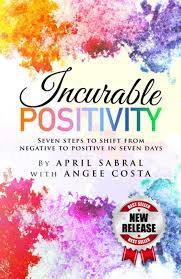
IC: In your book you suggest that having a positive mindset requires conditioning and training. Why do you think negative thoughts creep into our thinking so much that we need to be trained to think positively?
AS: Negative thoughts seep in because we are human and we live in a world where we learn judgement and comparison due to TV, news, social media and the way were were raised. This is normal; we can’t avoid it. However, we can learn how to make better choices and create conditions that will mitigate the negative inputs. Just like it is important to go to the gym and work out your body and build endurance, we need practices to condition our minds. This is neglected widely because it’s not something we physically see.
IC: What happens when people start thinking positively?
AS: Our perspective starts to shift, we become more peaceful and happier, we tap into positive emotions and energy and our lives start to have more meaning. We also more easily attract positive people and attract the things we want because we are not in resistance. Instead, we are acting and living from a receptivity mode. In business this invaluable.
IC: n the book, you also discuss a seven-step process that can shift our thinking from negative to positive. I understand you can’t give all the steps away here, but can you mention a few tips our readers can use to start thinking more positively, in their work as leaders and in their lives?
AS: Sure thing. One of the steps is about releasing negative thoughts, and acknowledging them. This requires you to accept the thoughts you’re having that are negative. Instead of ignoring them, I love to say “Thank you, brain, for sharing that thought with me, today I am not trying to solve that problem.” This might sound silly, but it will interrupt the ruminating thought in your mind allowing you to release it and move forwards to a better thought.
IC: How do you hire for positivity? Are there any signs to keep in mind when looking to hire positive people for your team?
AS: This is interesting. I have never hired for positivity, since, as I shared earlier, positivity is a skill and can be learned. However, just like learning to communicate, you must practice this and put steps in place to continually build your positivity. I also think having optimistic and skeptical people on a team is natural, and important. A team requires balance; if everyone was optimistic every day, then they may have blinds spots and take risks and make decisions that could negatively impact the business. Skeptical people help those of us who are glass half full to see what we might be missing. Both are valuable.
IC: What are you most positive about now?
AS: The future of retail. I’ve been spending time with leaders, training them on the power of positive leadership, and the enthusiasm and engagement is incredible. Retail has been in my DNA since being raised in an antique shop from a small child, and now I get to see the evolution of retail and work with brands that are ever evolving. That is something to be exceptionally positive about.