Meet the Founder Turning Compostable Beauty Into a Scalable Business Model
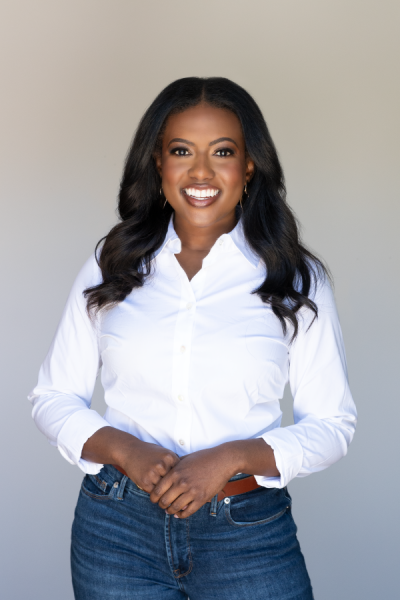
Raven Delk is the founder of Numa Labs, a cosmetics company tackling the beauty industry’s plastic waste problem with compostable materials, a circular business model, and innovative design. Women in Retail Leadership Circle (WIRLC) is highlighting female entrepreneurs during the month of May, designated as National Small Business Month.
Outside of building Numa, Raven is a passionate advocate for STEAM for social impact. Her community service initiative, Build Your Future, is inspiring North Carolina’s young people to move from apathy to action, with a focus on leveraging STEAM skills to make a community impact. Her work has been recognized by Google’s Women Techmakers program, the United Nations Foundation, Girl Up USA, and the Nichols Humanitarian Fund. She is based in North Carolina’s Triangle Region, where she loves to spend time outdoors, go to Pilates class, and spend time with her family.
We asked Raven a series of questions about her entrepreneurial journey, her leadership style, and more.
Women in Retail Leadership Circle: Can you share the origin story of how Numa Labs came to be?
Raven Delk: Numa Labs has been a labor of love since 2022. I became passionate about beauty as a form of self-expression from a young age through my experiences in dance and pageantry. But at school, I traded my pageant sashes for safety goggles as a STEM enthusiast pursuing a career in sustainability and technology. I decided to combine these two passions and take graduate courses in cosmetic science. From those learnings, the idea for Numa Labs was born!
WIRLC: Your website notes that you took up a “pandemic hobby” of reverse engineering your favorite products. What did you discover?
RD: Making do-it-yourself cosmetics is a bit of art, a bit of science, and a lot of fun! It’s possible to create effective, beautiful products solely from natural and organic ingredients, but it’s time consuming and difficult to scale. This is the tradeoff that we face as consumers.
WIRLC: You then began an intense deep dive into the world of cosmetics. What did you discover?
RD: My deep dive filled me with hope about the future of the industry. For instance, I learned about the increasing use of silk, fungi, and cellulose to replace microplastics in color cosmetics; the augmented reality applications that are helping consumers make informed purchasing decisions; the invention of smart packaging to increase safety and reduce waste; and more. The industry has many challenges, but innovators are working to tackle them. I’m proud to be a part of that movement.
WIRLC: You began with a single product, Numa Nails, a compostable press-on manicure, but you’ve got big plans for more products. What’s next?
RD: Numa Nails are just the beginning! My long-term vision is for Numa Labs to be at the forefront of sustainable innovation in consumer goods and expand into hair care, makeup, home care and beyond.
WIRLC: You’re taking painstaking steps to ensure your products reuse as much material as possible, are manufactured locally, and are compostable. Why take these added measures?
RD: Our mission-driven approach is a reflection of my personal values. I knew that I wanted to create a truly impactful brand. From a strategic perspective, our focus on sustainable manufacturing and materials has allowed us to build a passionate community and differentiate the brand in an increasingly competitive space. Our target audience is inspired by the opportunity to vote with their dollars for the future that they want to see.
WIRLC: What are the biggest challenges to being a female entrepreneur of color?
RD: My biggest challenge has been a lack of access to traditional funding. Many founders start with a friends and family round to get their business off the ground; I didn’t have access to those resources. This challenge isn’t exclusive to women or people of color. This has forced me to get creative and employ strategies like crowdfunding, pre-orders, and events, and these initiatives have doubled as a fundraising strategy and a form of market validation and community building.
I’m fortunate that for every challenge I’ve faced, I’ve received an equal amount of support from my community in Raleigh, NC. Between mentorship from researchers at NC State’s world-class materials science department, pro-bono legal support from Duke Law School, and countless other resources, I have an amazing community behind me.
WIRLC: As many retailers are rescinding their ESG initiatives — specifically taking a step back on reporting sustainability metrics — how do you stay consistent around your message of sustainability?
RD: It’s disheartening to see retailers scale back their sustainability initiatives. However, it’s also an opportunity to find those that truly resonate with our mission and to focus on building a brand that can compete with the best of the best regardless.
WIRLC: Can you also tell us about your work at Girl Up?
RD: Of course! I credit Girl Up for instilling a passion for social impact in me from a young age. Girl Up is the United Nations Foundation’s leadership development initiative focused on equity for young women and girls. From the ages of 16 to 22, I served as a high school club leader, a member of the Teen Advisory Board, and eventually as the U.S. South Regional Lead. I was able to connect with passionate, mission-driven young women from all over the world, and I carry these experiences with me to this day.