Navigating Consumer Volatility: Insights From Retail Investors and Operators
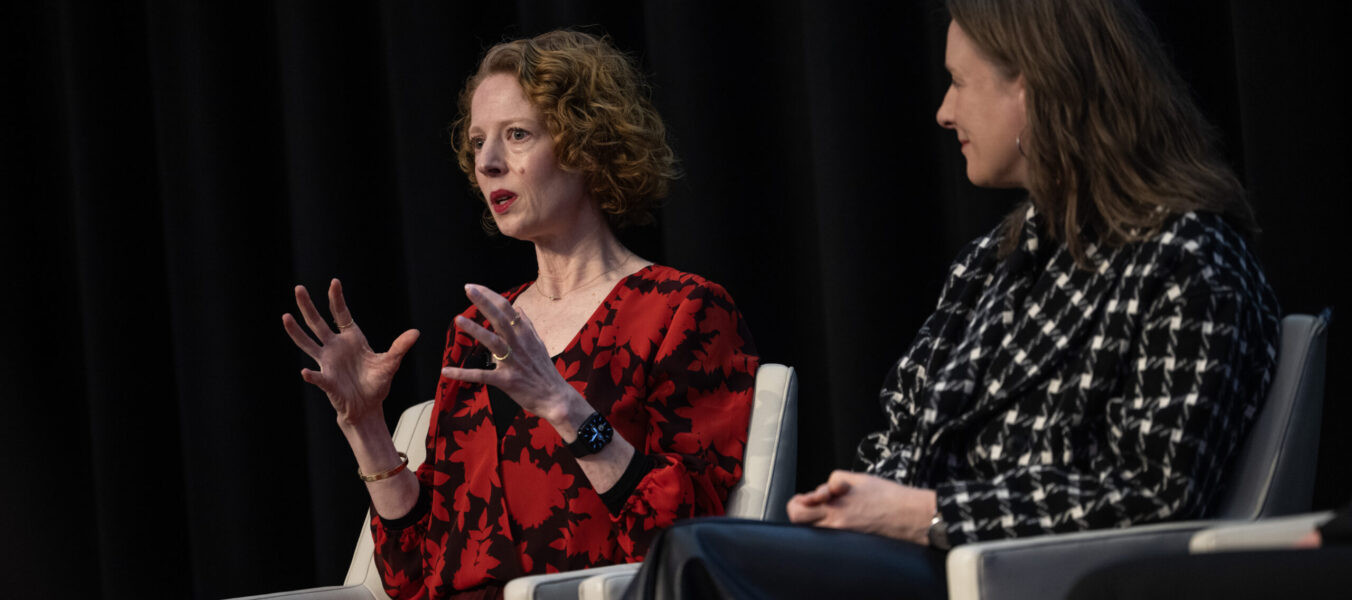
Retail leaders and investors are watching the market closely as macroeconomic forces and shifting consumer behavior create both challenges and opportunities. During a panel discussion at the recent Women in Retail CEO Experience, held last month at the iconic New York Stock Exchange and moderated by by Farah Soi, managing partner and global co-head of consumer at strategic communications and advisory firm ICR, panelists shared insights on growth, valuation, and investor communication.
A Bifurcated Market
Lorraine Hutchinson, managing director, U.S. equity research at Bank of America, referred to 2025 as a “wild” year, noting stark differences across consumer segments. “We’re seeing a real dichotomy between the high end and the low end,” she said. “The upper-income consumer has been pretty strong. And [while] we’ve seen really strong spending for the high end, [we’ve seen] some squishier performance at the middle and lower end.”
Hutchinson also emphasized the importance of strong brands. “If you have a hot brand right now, you’re flying,” she noted. “Consumers are very focused on a great brand and a great value.”
Emily Culp, who sits on multiple corporate boards and is the chief strategy and brand officer at BodyHealth, agreed. “I see it almost as a barbell,” she said. “Value is winning for some companies. On the other side, premium brands see consumers willing to spend. We’re stripping out almost any type of promotion and still holding margins.”
The Value of Consistency
Regardless of the consumer target, investors reward consistent execution, according to panelist Stacey Sears, senior vice president and portfolio manager at Emerald Advisers. “The market is willing to pay for consistency,” she said. “Walmart trading at 45 times earnings and Costco at 50 times — there’s a scarcity value in that.”
Sears also noted that during the second half of 2025, discretionary categories gained momentum as tariff pressures eased and interest rates were cut. “The market leans into areas where companies are executing well,” Sears said. “We’re analyzing growth, profitability and market opportunity when considering valuation. It’s a very fluid process.”
Valuation Gaps
The panel also discussed the disconnect between CEO expectations and market reality. “Sometimes a CEO and an early investor believe the valuation should be a 10x multiple,” explained Sears. “But unit economics really drive the multiple.”
Hutchinson added: “You can put a stock out at $20, and if nobody wants to buy it at $20, it’s going down. It’s really the investor.”
Sears noted that there’s an IPO discount for new or unproven public companies. “The discount that a new operator or an unproven private company going public is not going to garner the same valuation, and they shouldn’t. But it’s very situational.”
Private Equity and Infrastructure
Long-term private equity ownership also influences company performance. Sears said, “Some companies have been starved of capital and underinvested in infrastructure. Other companies, with balanced growth, have invested in systems, distribution, and management depth. It’s very situational.”
Culp added, “It depends on the private equity partner. Some will airdrop operating partners into key functions rather than just senior hires. It’s worth noting it’s very case by case.”
Growth With Discipline
Running a privately held brand, Culp emphasized long-term planning: “We have no institutional investors. It’s freeing. I can look at the business long term,” she said, adding that BodyHealth expanded into wholesale thoughtfully, which boosted brand heat. “This allowed us to scale strategically.”
Culp also stressed repeatable growth. “It comes down to discipline,” she said. “I want repeatable growth. Time is my friend in that regard. True long-term capital is a blessing.”
Investor Communication
Lastly, the panel explored how companies should communicate with investors. “Management must provide clear KPIs and explain any deviations transparently,” Sears said. “Investors want to understand the causes and the plan to address issues. We want to be long-term partners.”
Hutchinson added, “If you pull an order forward in one quarter and beat revenue, and then miss in the next without telling anyone, you lose credibility immediately,” she said.” Incremental data points can be important, but only if communicated clearly and consistently.”