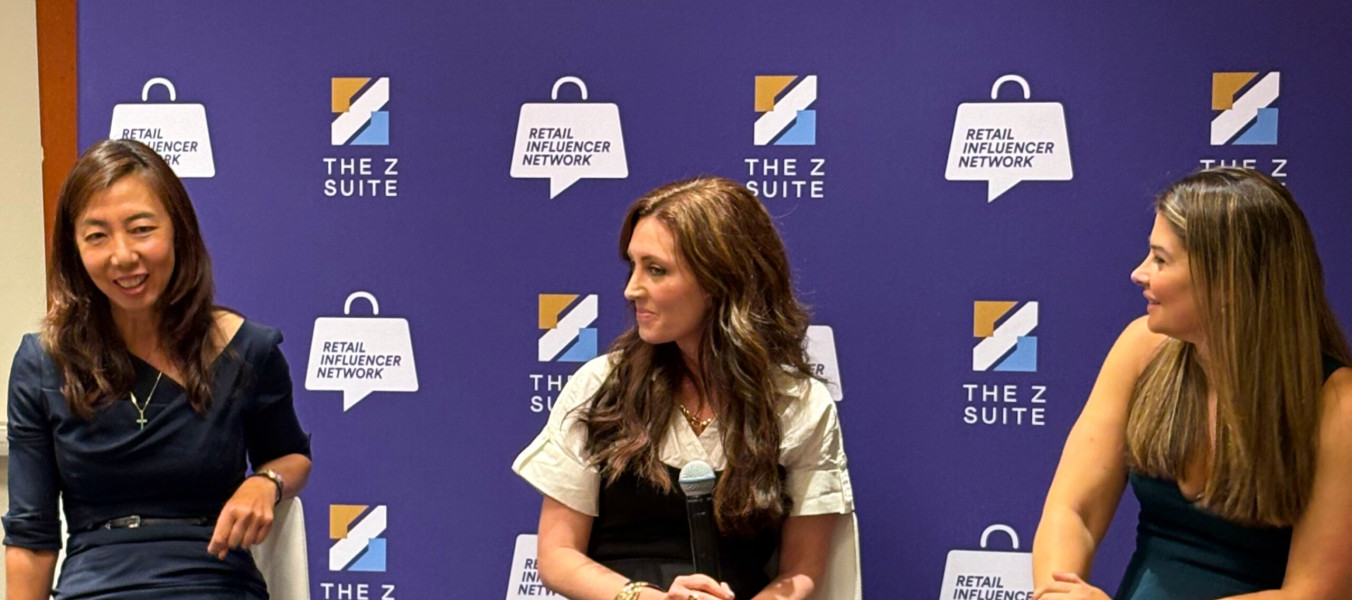
C-Suite Execs From Ulta, Wayfair Talk AI in Retail
During a press breakfast at CommerceNext in New York last week, Fiona Tan, chief technology officer at Wayfair, and Kelly Mahoney, chief marketing officer at Ulta Beauty, shared how their companies are using artificial intelligence to evolve customer experiences while staying deeply grounded in brand purpose and personalization. Both leaders offered a clear message: the next generation of commerce is being shaped at the intersection of technology, creativity, and human empathy.
Here are some of the key takeaways from the conversation, which was moderated by Krystina Gustafson, co-founder and chief content officer, RetailClub.
1. AI is the engine — but creativity is the differentiator.
Mahoney emphasized that Ulta has moved from focusing solely on data architecture to integrating creativity into every touchpoint. “Creativity and tech are the new power couple,” she said, adding that this fusion is central to creating experiences that resonate with Gen Z and loyalty members alike.
2. Generative AI unlocks content scalability and personalization.
Ulta’s challenge is scale: “We need to 30x our content,” Mahoney said. Generative AI allows the beauty retailer to meet increasing demand for personalized product discovery while maintaining authenticity. However, she added that Ulta is cautious about using AI-generated imagery that could feel inauthentic, especially in a category where realness is so critical.
“Now you can speak to customers in a truly one-to-one way,” added Wayfair’s Tan. “It’s not six segments anymore — it’s your style, your price point, your life.”
3. Discovery experiences are shifting from words to visuals.
Tan highlighted the growing role of multimodal generative AI in the shopping journey. “Sometimes customers don’t know how to describe what they’re looking for,” she explained. The solution? AI-generated room images, interactive reels, and visual discovery tools on Wayfair’s app that allow users to engage emotionally and intuitively with the brand.
4. Agentic commerce and conversational UX are on the horizon.
Both leaders noted that shopping agents, conversational AI, and generative search are quickly evolving. “We need to make sure our capabilities are ready for these agents,” Tan said, referencing emerging interfaces where users shop via smart TVs, voice, or AI chat. However, both agreed that these tools must complement — not replace — traditional brand websites and physical stores.
5. Tech doesn’t replace people; it powers better human interactions.
Mahoney shared that AI is enabling Ulta’s 50,000 associates to deliver more personalized in-store experiences. From understanding salon history to social media preferences, associates now have tools to deliver curated, real-time service. “It’s not about replacing the associate. It’s about empowering them,” she said.
6. Organizational transformation is non-negotiable.
Mahoney described Ulta’s journey toward a seamless operating model, supported by its tech stack and anchored by a cross-functional “fusion team” of marketers, technologists, and experience owners. “We had to stop thinking of this as a project,” she noted. “This is a way of working.”
7. Loyalty is more than points — it’s a relationship.
Ulta’s 45-million-member rewards program isn’t just about perks. “It’s the start of the relationship,” said Mahoney. By understanding customer data deeply, from what they browse online to how they shop in stores, Ulta crafts what Mahoney calls “undeniably Ulta” moments that keep customers coming back.
8. The future is flexible and still unfolding.
Tan acknowledged that shopping behaviors are changing, but not uniformly. While some Wayfair shoppers love image-based discovery, others still prefer traditional search. “We need to do both,” she said, noting that platforms must balance innovation with customer readiness and invest in behaviors that will gain traction over time.
In a retail landscape seemingly overrun by AI hype and digital overload, both Wayfair and Ulta Beauty are proving that technology’s real promise lies in serving human needs at scale — not replacing them. Retailers that embrace this duality by investing in personalization, brand storytelling, and operational agility are poised for success in the years ahead.