How The Vitamin Shoppe, Hanky Panky, and AERIN are Thinking About Profitability Strategies
Retailers and brands have been faced with a constant cycle of disruption over the past decade, from economic disruption to socio-political disruption, to changing consumer behaviors, and more. With that, many retailers and brands have, not surprisingly, struggled to be profitable. However, retailers that have adopted a digital-first mentality — one that flips the focus to be e-commerce-led and optimizes stores to support online demand — are better at meeting consumer needs and ultimately finding success. But it’s not easy. Becoming a digital-first retailer requires a significant transformation to your operating model.
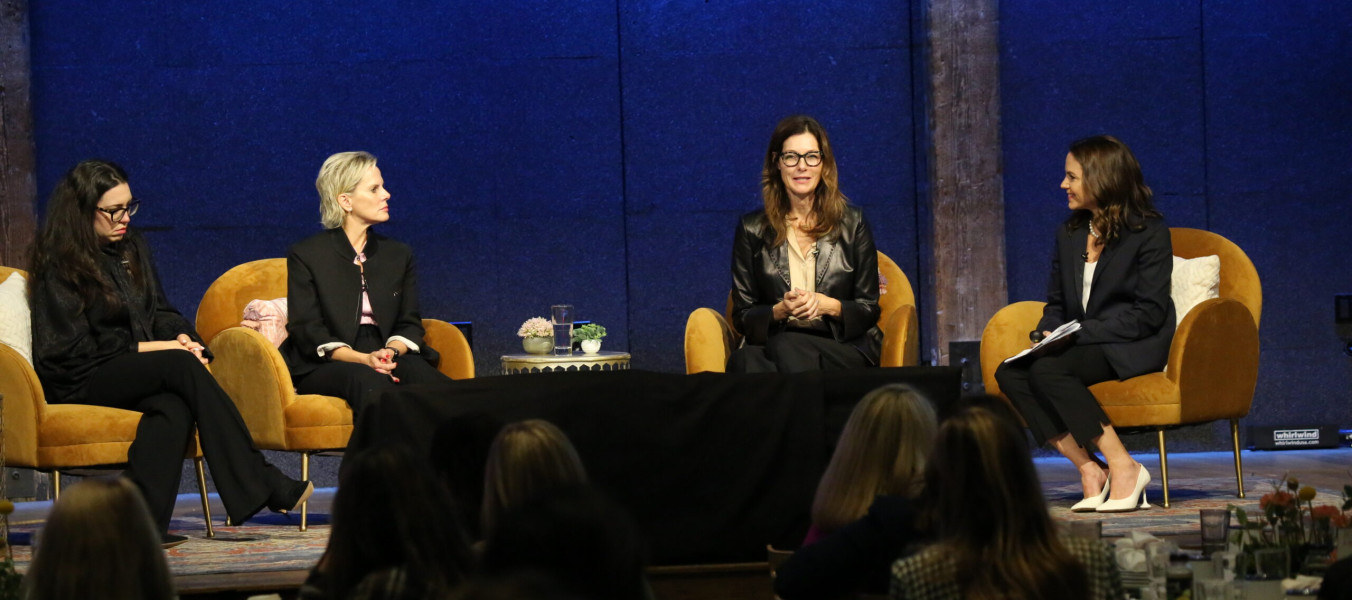
Below is a summary of how three retailers worked to obtain profitability status in 2023. Speaking at the 2023 Women in Retail On the Road: New York City event on Oct. 12 (moderated by Sonia Lapinsky, partner and managing director, AlixPartners), three female retail leaders from AERIN, The Vitamin Shoppe and Hanky Panky shared how they transformed their businesses and drove profits in a challenging environment.
Maximize First-Party Data
Angela Gruszka, senior vice president of digital marketing and e-commerce for luxury home decor, fashion and beauty brand AERIN, said her team is trying to make better use of first-party data and focus on retention to offset rising customer acquisition costs.
“That’s one of our top priorities for 2024,” Gruszka said, adding that the company is trying to gain a better understanding of the customer journey and purchasing behavior. She said it’s critical that brands understand the motivations of their customer from a first-party perspective to help guide in segmentation, and then look outside of that from a third-party perspective to optimizing any prospecting efforts.
“I think it’s critical to think about it from a full-funnel perspective .. the reality is if you don’t drive customers at the top of the funnel, they’ll never make it down to the bottom of the funnel and you’ll exhaust your efforts there,” she said.
Look at Multiple Channels
Brenda Berger, the CEO at the 46-year-old lingerie company Hanky Panky, said Hank Panky is a legacy brand that does not have a lot of technology built into the platform from day one, which is affecting its profitability.
“The cost is really, how do we get caught up to speed with everybody else so we can leverage that data?” She said. Hanky Panky is addressing that by putting in a new customer data platform, working on segmentation and doing meaningful, entertaining activations.
Hanky Panky is predominantly in e-commerce — the brand has two retail stores — and is 60 percent wholesale and 40 percent digital. Berger said she looks at Hanky Panky’s wholesale partners’ data every week to identify patterns and shifts.
“We have to look at what’s happening through multiple channels,” she said.
Survey Your Customers
The Vitamin Shoppe surveys their customers every year around the same time, said Nadina Guglielmetti, chief customer officer of The Vitamin Shoppe. “It’s probably one of the most critical things we do,” she said. “That data helps inform and education my cross-functional partners.”
Since the data from the customer survey showed repeatedly that customers are going online first, The Vitamin Shoppe reevaluated the customer journey and rethought the relationship between the store and online. The company rebuilt its predictive models, reestablished its CRM and email series, and reassessed the way and frequency customers get coupons and offers.
“Even as we think about and do broader campaigning, we don’t often talk about our brand, but when we do, we establish top-to-bottom campaigns that really nurture the customer all the way down to the end,” she said.
Women in Retail Leadership Circle (WIRLC) members can watch the entire discussion from the panel in New York here. Not a member? Apply today!