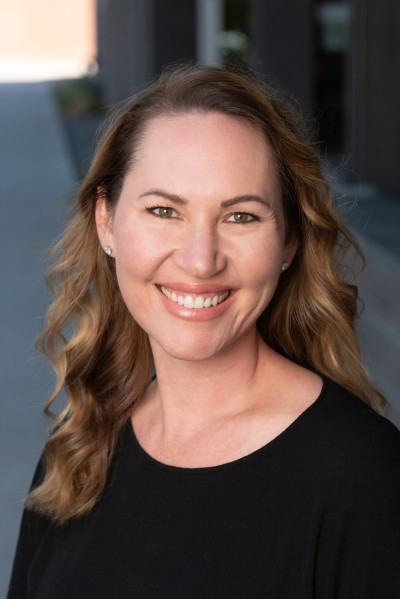
Q&A With Sheila Kressler-Crowley, Director, Terry Lundgren Center for Retailing
Sheila Kressler-Crowley serves as the director of the Terry J. Lundgren Center for Retailing at the University of Arizona. Under her guidance, the center offers professional development, hands-on learning opportunities, internships, and job placement services for students majoring in retailing and consumer science. Recently, Kressler-Crowley introduced the Lundgren Consumer Science Lab, which grants brands and companies access to consumer behavior research led by faculty and students. This includes services such as product development, product testing, Digital Twin creation, and a creative content maker space. Before transitioning to higher education, Kressler-Crowley served as the marketing director for a chain of independent bookstores and music stores in Arizona for 13 years. Additionally, she devoted over 20 years to radio broadcasting, working as both an on-air talent and a producer.
Women in Retail Leadership Circle (WIRLC) asked Kressler-Crowley, a WIRLC consultant member, a series of questions about both her professional role and personal life, including her leadership style, her approach to mentoring the next generation of female leaders, and much more.
Women in Retail Leadership Circle: What first attracted you to the world of retail?
Sheila Kressler-Crowley: The people and the relationships, and that retail never sits still. It’s constantly changing and never boring!
WIRLC: You’ve also spent time working in radio, fitness, film marketing, and now higher education. How has that shaped your leadership style?
SKC: No matter what industry I’ve been in, connecting with people has been the through line in every role I’ve had. Each industry attracts a different set of people, so it has offered me exposure to all walks of life and cultures. Those relationships opened doors, expanded my worldview, and ultimately shaped how I lead.
WIRLC: You’ve built teams in both corporate and academic settings. What’s a tip you have for building great teams?
SKC: Trust your team and make sure they trust you. People move the work or projects forward. Give them the space to be creative, make mistakes and succeed.
WIRLC: What are your primary responsibilities as director of the Terry Lundgren Center for Retailing?
SKC: My main role is to make sure the Center is financially healthy through partnerships and industry collaborations so that we can invest back in the student experience and prepare this next generation of retail leaders.
WIRLC: What’s the hardest part about being in charge?
SKC: That self-awareness piece in realizing not everyone moves like you do. I like to move fast, make decisions, and keep things moving, but I’ve had to learn to slow down, meet people where they are, and bring them along. It’s a constant balance.
WIRLC: What’s your approach to mentoring younger talent?
SKC: Mentoring younger talent takes patience, humility, and a lot of listening. You can’t project your own path onto them. They’re just starting out, and their world looks totally different. I remind myself that you only know what you know. Think back to being 19 or 22 … did you have it all figured out? Most of us didn’t and neither do they. There’s so much pressure on them to “be somebody” or to have a clear passion right away, and honestly, that’s not fair or realistic. That’s what your early years are for … figuring it out. I try to guide with curiosity, share what I’ve learned, and leave them with a few takeaways.
WIRLC: What’s a recent project you worked on that you’re particularly proud of?
SKC: I’m excited about the Lundgren Consumer Science Lab we just launched in fall of 2024. We took a shell of an idea and created a retail workshop for pop-ups and consumer behavior research, we added a creator and content digital maker space and, like retail it’s designed to be modular, flexible and change as trends evolve and new technologies emerge.
WIRLC: What are the biggest retail trends you’re interested in?
SKC: I’m paying attention to artificial intelligence — mostly how it’s going to affect entry-level jobs and what do we need to do now to prepare students to work with these technologies.
WIRLC: What are your non-negotiables when it comes to work-life balance?
SKC: Family comes first for me and being there for the important moments really matters. I’ve been intentional about choosing companies and leaders who not only respect that but make it part of the culture. I also need space to give back or stay creative, so I’ve always had a side gig or outlet for those things. Every employer I’ve worked with has given me the freedom to explore that, which I really value.
WIRLC: How are you incorporating AI into your professional or personal life on a daily basis?
SKC: Professionally, I’ve been playing around with GPT agents, creating email assistants and agents for projects, and/or using it to help outline new ideas or student workshops. I still write out all my emails/correspondence and proposals, but I dump it into an AI project or create an agent so it learns my style. It’s not perfect and it gets a lot of things wrong or that I wouldn’t even say. I’m in the trust-but-verify camp. I already know how to critically think, create presentations and outlines, so for me it just speeds up the process and saves me time. Personally, I’m using it to create trip itineraries. However, for research I still like googling and double-checking the links/sources … call me old-fashioned!