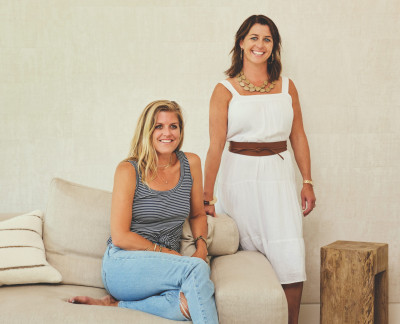
How Carve Designs' Founders Approach Each Decision With an Eye Toward Sustainability
In celebration of Women’s History Month, Women in Retail Leadership Circle (WIRLC) is highlighting inspiring female entrepreneurs shaping the retail industry. In this installment, we chat with Thayer Sylvester and Jennifer Hinton, founders of Carve Designs, a beach lifestyle brand offering surf, swim, fitness and lifestyle clothing. We explore the founders’ career journeys, their motivations for launching the brand, the company’s sustainability practices, how they grew from a rashguard and boardshort company into a lifestyle brand, and much more.
Women in Retail Leadership Circle: Can you share the origin of Carve Designs? How did the idea come to fruition?
Thayer Sylvester: I started my career within a large consumer product company at Procter & Gamble. I found it enormously frustrating that you couldn’t influence change. Even when you identified something as inefficient or flat-out not working, changing anything was unbelievably difficult. That drove me crazy. From then on, I always wanted to work on my own, because then as soon as you identify something’s wrong, you can fix it. Fast-forward to when I was on a surf trip to San Pancho, Mexico with my co-founder, Jennifer Hinton. As we lounged in a hammock waiting for the waves to roll back in, we lamented how hard it was to find boardshorts that could keep up with us — real women with real bodies and a real passion for adventure. This led us to Carve Designs. While we started as a surf apparel company selling rash guards and boardshorts in 2003, we’ve grown into a complete beach lifestyle brand.
WIRLC: What were the biggest hurdles to overcome in growing Carve Designs into a lifestyle brand?
TS: Particularly in fashion or apparel, people sometimes view this space as unserious or not business-minded. Some think we’re just kind of playing Barbie doll dress-up. I’ve always approached it as, “How do we create and scale a successful, profitable business?” When people make assumptions about the type of business that you’re growing, it can feel like they’re undermining what you’re doing. I consistently approach those conversations with a lot of confidence and knowledge that we’re running a great business and never let the detractors get me down.
WIRLC: Ninety-five percent of Carve Designs’ products are made from recycled, upcycled and sustainable materials. How much harder is that from a manufacturing/supply chain standpoint, and why is that important to you?
Jennifer Hinton: It’s just part of our DNA at this point. Every decision we make comes back to one question: Can we do this sustainably? It’s second nature to us. Our production manager and other team members go over and visit our facilities in India and China once a year. We have wonderful relationships with our facilities because we’re able to foster a meaningful relationship. It’s about mutual support where they’ll go the extra mile to find the fabric or make something work because they genuinely care. It becomes a deeper, more meaningful partnership, all working toward the same mission. For example, if we’re designing a silk dress but traditional silk isn’t eco-friendly, our mission is to find a sustainable alternative. I’ve had designers suggest we go ahead with conventional silk, but for me, that’s not an option. If we can’t do it sustainably, it’s just not happening — simple as that. It’s not a choice; it’s just the way we operate.
WIRLC: What advice would you have for retailers hoping to incorporate more sustainability initiatives into their core values?
JH: Some important values in creating sustainable clothing are thoughtfulness, honesty, and knowing your customers — thinking about what our customer is looking for and how it plays into her life. Having it go from day to night is something that we talk about, including that effortlessness like throw it on and you’re good all day long. You could drop your kids off, meet your girlfriends for lunch, and then go to work or wherever else. Being as transparent as possible with our customers is key to gaining their trust. We know we’re in the business of creating more stuff, so honesty about how we create our clothing is crucial. Overall, just honing in on knowing your customer. When she’s going to buy her new white tank top, she knows she can get the sustainable organic cotton one from us. To be able to take that off the table for a consumer’s decision-making process is amazing as a person makes a billion decisions a day. Clothing should always be sustainable. It’s just the strategy that’s going to work long term because you’re taking things off the table for your customer.
WIRLC: As many retailers are rescinding their ESG initiatives — specifically taking a step back on reporting sustainability metrics — how do you stay consistent around your message of sustainability?
JH: This year, we’re incorporating more sustainability messaging into our campaigns. We’re slowly trying to embrace more direct, impact-driven language, similar to what Patagonia does. I’ve shied away from that in the past because I didn’t want to overwhelm people, but now we’re ready to make it a bigger part of our brand voice. Our hangtags and our product detail pages (PDPs) break down exactly what goes into each piece and fabric. A goal of mine in the next year is to start incorporating short videos highlighting the sustainability story of specific pieces — from how it may use less water, where the fabric comes from, and the impact of choosing organic materials. So when a customer is looking at the Dylan Shirt, for example, they can also see where it’s made, how the fabric is sourced, and the impact behind it.
WIRLC: What are your non-negotiables when it comes to work-life balance?
TS: You just have to make it happen. It’s easy to let work take over your life. What you realize is that leads to creating an unbalance. You perform better when you maintain balance in your life. I always make room to exercise, volunteer, take a vacation, and raise my kids. Lately, I’m addicted to F45. It’s super fun with a great community with people of all ages and it keeps you fit.
WIRLC: What’s the best way you motivate your team?
TS: The employer landscape has changed a lot over the last several years. At Carve Designs, we pride ourselves on having a very high retention rate. We’ve achieved that because we understand the importance of people being able to achieve a work-life balance. Our employees feel comfortable letting us know that they want to leave early because they want to go to their kid’s soccer game, take a midday break to hit a yoga class, or need to go visit their parents at their retirement community for a week. Understanding your employees have a life outside of work and listening to them makes them feel heard and valued. Reinforce that their lives are important. I think as long as we keep doing that we’re able to keep our employees happy.
WIRLC: Where can people find Carve Designs’ products?
JH: You can find Carve Designs clothing at specialty retailers all over the country, both online and in-store, including our website.
WIRLC: What are long-term goals for Carve Designs?
JH: One of the biggest goals that we want to achieve in the next five years is to become more circular where we take back Carve Designs clothing or any clothing and be able to upcycle or downcycle it into other products. We also want to be able to recycle swimsuits, which has proven to be really, really difficult to figure out how to do. I don’t think anyone has a successful model yet, but that’s one of our five-year goals.