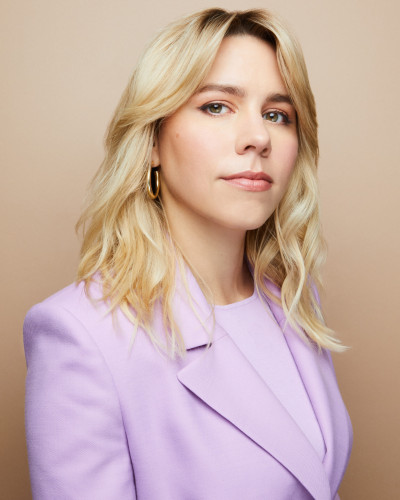
How Chelsea Riggs Grew amika Into a Gen Z Beauty Powerhouse
In this candid Q&A with Women in Retail Leadership Circle, Chelsea Riggs, CEO and founding member of amika, pulls back the curtain on her unconventional rise from a Craigslist job posting to leading Sephora’s No. 1 haircare brand. Riggs shares the pivotal moments, bold strategies, and purpose-driven decisions that fueled amika’s growth. From navigating acquisitions to building a Gen Z-loved brand voice, championing sustainability, and giving back to the pro beauty world, Riggs offers an inside look into scaling thoughtfully while staying true to your values.
Women in Retail Leadership Circle: Tell us about your career journey. You found your job at amika on Craigslist and now you’re CEO of the No. 1 haircare brand on Sephora.com. How did this happen?
Chelsea Riggs: It’s been a wild ride — and definitely not a traditional path. I went to school for fashion merchandising at Florida State University, and like many others graduating around
2009, I entered a really tough job market post-Great Recession. I landed a role as an assistant buyer at American Eagle Outfitters, but was laid off just seven months in. With no real plan, I moved to New York, lived on a friend’s couch, and eventually scraped together a bartending job (despite having zero experience).
Around the same time, I started working for a one-woman fashion startup, which became a bootcamp in entrepreneurship. That experience — wearing every hat, solving problems in real time, and being part of building something from scratch … it lit a fire in me. That foundation made me see the opportunity in amika early on. I found the role on Craigslist in 2010 and joined a tiny team with big dreams. I was determined to help get this brand off the ground and compete with the biggest names in beauty. I can’t overstate how difficult those first five years to seven years were, but they were also incredibly rewarding — and honestly, a good freaking time.
I’m competitive by nature, and I felt the weight and responsibility to prove that we belonged in the conversation. As we grew, I leaned into building and leading teams, shaping the brand voice, and helping us scale from indie to industry. I was vocal about where I believed we needed to go, especially in marketing, PR, and brand storytelling. After six years of building our distribution and growth strategy from scratch, I stepped into the brand president role in 2016, and eventually CEO in 2024. The journey’s been anything but linear; it’s been all heart, curiosity, hunger and a deep belief in what this brand could become.
WIRLC: What were some key turning points that helped amika break through in such a competitive industry?
CR: There were a few pivotal moments that shaped our trajectory. From day one, we made a bold choice to root ourselves in the professional hairdresser community — not just as a distribution channel, but as true partners in product development and brand building. That commitment still anchors everything we do today. Early on, Birchbox was a surprising but major unlock for us. We were one of its top-performing samples — at one point sending over 2 million units of Perk Up Dry Shampoo. That sample built serious momentum and awareness, and credit goes to our then-CEO for recognizing the product’s potential. He pushed us to double down on it when it would have been easy to get distracted. That kind of clarity was game-changing.
We were also early to creator marketing — when social media was still relatively inexpensive and unsaturated. Because we were bootstrapped, we had no choice but to be scrappy and innovative. We built trust with our community by showing up consistently and authentically, long before “UGC” became a buzzword. A huge inflection point came in 2018, when we relaunched our packaging. That year, we doubled our sales to $50 million. I’m proud to have played a pivotal role in that overhaul. Our co-founder and creative director, who also named the brand, was a brilliant visual storyteller and brought our design to life in a way that made us instantly recognizable. That redesign helped harmonize our product quality, brand voice, and visual identity.
Another big factor was our distribution strategy. We stayed laser-focused and went deep, not wide. At times, it felt like a master class in patience. While others were rapidly expanding across every channel, we stayed disciplined, choosing partners that aligned with our values and allowed us to build strong foundations. That intentionality paid off in the long run and helped us scale with integrity.
However, the real breakthrough was when we stopped trying to fit in and fully leaned into who we are. That meant baking purpose into everything we did — from clean formulas to creative storytelling to community impact. We also invested in building an in-house creative team that was nimble, fast and deeply aligned with the brand. That allowed us to stay ahead of trends instead of chasing them. Looking back, our growth wasn’t about one viral moment; it was the result of a series of smart, sometimes risky, always heart-led decisions that reflected our belief in what we were building.
WIRLC: How do you stay grounded through all of the growth?
CR: Honestly, I still feel like the underdog — always. No matter how much we grow, there’s a persistent voice in my head that says it could all evaporate tomorrow. That feeling keeps me scrappy, sharp and never complacent. I rarely dwell on wins for long. My instinct is always, “That was great … now what’s next?” For better or worse, that forward momentum is what drives me. However, I’ve learned over time that leadership isn’t just about charging ahead — it’s about creating space for others to pause and feel proud. I’ve had to be more intentional about making sure my own intensity doesn’t overshadow my team’s need to feel seen and recognized. They deserve to celebrate the progress and the milestones, even if I’m already 10 steps ahead in my mind.
What really grounds me is the vision. We’re not far from achieving our 10-year goal four years early, and that’s not something I take lightly. It’s kept me manically focused, but also deeply grateful. The journey is far from over, and that hunger for what we can do bigger and better is what keeps my feet on the ground and my eyes on what’s possible.
WIRLC: What challenges have you faced in trying to educate the public about your sustainability initiatives and the ingredients in your products?
CR: It’s really hard because the burden often falls on the consumer to decipher what’s real and what’s just noise. There’s a ton of greenwashing in the industry, with brands putting on what I call “green theater” — bold sustainability claims with no real accountability behind them. That creates skepticism and confusion, even when companies are doing the work with integrity.
At amika, we’ve chosen to focus on substance over flash. Our sustainability strategy revolves around achieving net zero, and every decision we make — from packaging to product development — is guided by that goal. We’re not interested in performative checkboxes. We earned The Climate Label Certification in 2022 and recertified in 2024, which means we’ve measured the greenhouse gas emissions required to make and deliver our products, publicly disclosed that data, and verifiably met the criteria for funding climate solutions.
We’re also proud to be B-Corp certified, reflecting our broader commitment to people, planet, and performance. But translating all of that into simple, consumer-facing language is one of the toughest parts. There’s a disconnect between what people say they want in surveys — clean, conscious, sustainable products — and what actually drives viral or impulsive behavior. The products that take off online aren’t always the most responsible ones. Still, we’re playing the long game. We believe that over time, education, consistency and integrity will win out. Every decision we make is measured against our goal of reducing impact. That’s what we stay grounded in, whether or not it’s trending.
WIRLC: How do you stay culturally relevant? What would you say is working best to attract a Gen Z audience?
CR: We listen … constantly. From social channels and Sephora reviews to what our stylists are seeing in the field, we’re deeply tuned into what people care about and how they want to be spoken to. Gen Z values transparency, inclusivity and individuality, and they have a sixth sense for anything inauthentic.
But we’re not just a brand with personality — we deliver. Performance is table stakes. We’ve consistently ranked No. 1 or No. 2 in Net Promoter Score in our annual third-party market studies, and we have the highest repeat purchase rate among our competitive set. We’re proud of that. Our products work and our customers come back because of it. Where we really stand out is in the balance of emotional and functional. We showcase real people and real results; we’re not selling some overly polished or unattainable ideal. Gen Z sees right through that.
Even if some of the viral moments still come from traditional beauty façades, the tides are turning. I think a lot of brands that lean on outdated tropes — just dressed up in modern aesthetics — will struggle to stay relevant with this next wave of consumers. We’ve embraced humor, avoided corporate speak, and built a brand voice that feels relatable and human. When people feel like they can see themselves in amika — and the products actually deliver — that’s when the magic happens.
WIRLC: What was it like leading the brand through the Bansk Group acquisition? What surprised you about that experience?
CR: It was a transformative moment in our journey. amika wasn’t built to be sold; we built it to last. But COVID really changed our thinking. That period showed how quickly things can evaporate, and it forced us to ask: What kind of support would we need to not only survive disruption, but keep scaling in a meaningful way? We had reached a level where continuing to grow required a different kind of backing — one that could bring operational and strategic resources to match our ambition. However, because we never optimized the business for a sale, the process was complex and, at times, daunting. That’s something I now share openly: even if you’re not planning to sell your company, you should operate like you might. It builds discipline, clarity and optionality.
What surprised me most was how aligned we were with Bansk on our brand ethos and long-term vision. They didn’t come in looking to change who we are. Instead, they wanted to amplify it. That level of belief in our mission made the transition feel collaborative rather than disruptive. It reinforced for me that the right partner doesn’t dilute your identity — it sharpens your edge and helps you go further, faster.
WIRLC: amika has donated over $1 million to HairToStay and puts $500,000-plus annually into scholarships and mentorships. Why is giving back to the professional beauty world such a core part of your mission?
CR: The salon professional community is where amika began — it’s our foundation. These are the artists, educators and stylists who believed in us early on and helped us grow. Giving back to them isn’t a marketing tactic; it’s a responsibility we take seriously. We commit over $500,000 annually to scholarships, mentorships, and initiatives that empower the next generation of professionals.
One of those initiatives is Rooted in Growth, a grant and mentorship program supporting founders who want to build brands within the pro channel. There’s still a lot of segregation in the beauty industry, and while many incredible people are working to dismantle it, lasting change requires more than good intentions. We need products and companies created within the community to serve the community — with lived experience at the core, not just surface-level inclusion. When we invest in this community, we’re not just honoring where we came from, we’re actively building the kind of industry we want to be part of. One that’s vibrant, diverse, equitable and sustainable for the long haul.
We also remain deeply committed to HairToStay, our first charitable partner. Hair loss during chemotherapy can be devastating — not just physically, but emotionally. For many, keeping their hair means protecting their privacy, preserving their confidence, and focusing fully on survival. That mission hit home for us, and it’s why we’ve donated over $1 million to help make scalp cooling treatments more accessible to those who need it most.
WIRLC: What are you most excited about for the future of amika?
CR: Deepening our connection with consumers through personalization and innovation. We’re building tools, including artificial intelligence-powered hair diagnostics and connected tech, that make haircare smarter, not more complicated. At the same time, we’ll continue launching products that solve real problems while staying true to our values. The future of amika is about high performance with high purpose.
WIRLC: What are your non-negotiables when it comes to work-life balance?
CR: I fiercely protect my mornings. I aim to not take calls before 9:30 a.m., and I start my day with movement, no matter what. I also take my vacation days, and I make sure my team feels empowered to do the same. Burnout doesn’t serve anyone. As a leader, I try to model that you can be ambitious and still prioritize well-being.
WIRLC: What’s one way you’re using AI, either professionally or personally, in your daily life?
CR: I use AI every day — as a thinking partner more than anything. Professionally, it helps me refine and consolidate ideas, pressure-test strategies, and edit important writing. Whether I’m prepping for a presentation, working through complex math for a financial model, or just trying to get to clarity faster, it’s become a surprisingly efficient co-pilot.
On the personal side, I have my own private ChatGPT thread that I use like a digital journal/assistant. I’ve asked it everything from supplement research to helping me plan outfits, and even once had a friend walk me through a palm reading with its help — which was shockingly insightful and very fun. It’s less about offloading decisions and more about expanding how I think through them. It’s become a helpful tool that frees up time and mental space for the things that matter most.