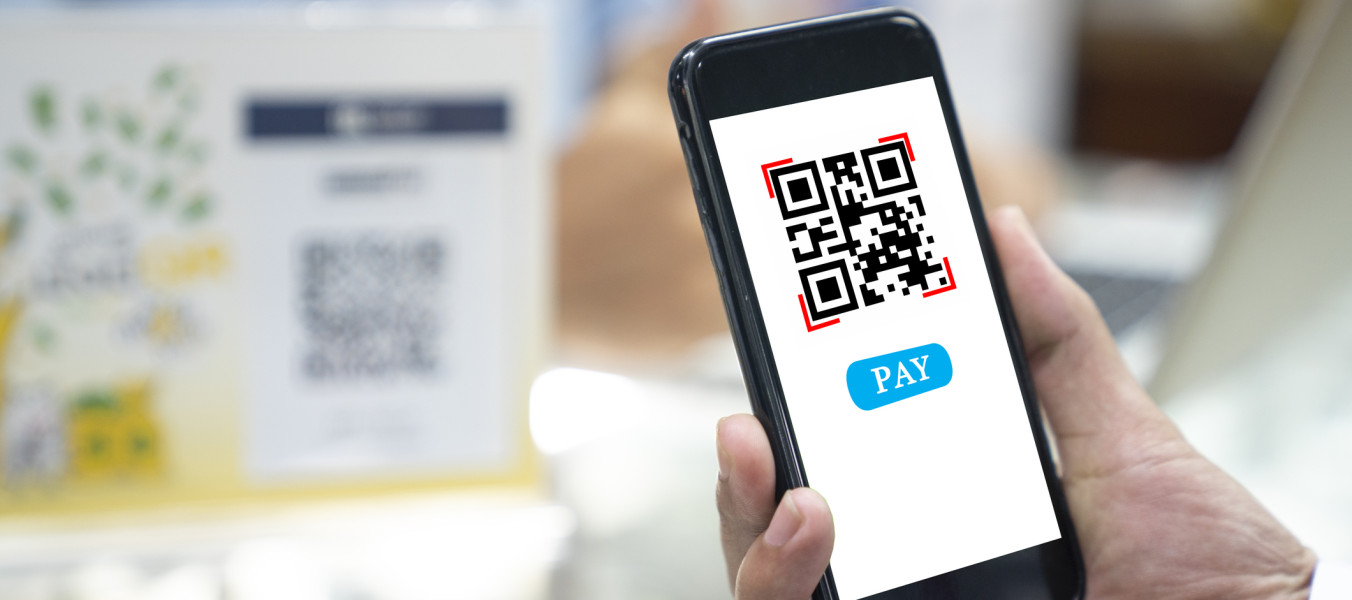
Remember the QR Code From the '90s? It’s Transforming Today's CX
The humble QR code appeared to be a solution for a nonexistent problem when it debuted in the 1990s. The much-hyped technology languished for a while before it seemed to disappear.
That was then. The past few years have seen the rebirth of this useful code as a tool for improving customer experiences and strengthening relationships — in stores, restaurants, advertising, manufacturing, and other environments.
For those who might not remember, a Quick Response (QR) code is an optical label, a type of barcode that contains information about the item it is attached to. You simply point your phone’s camera at the label and are connected to a web page where you can browse information, conduct transactions and perform other tasks.
Although QR codes have been successful in Asia for decades, they didn’t catch on initially in the United States, mostly because you needed a dedicated app to scan a QR code — making it too bothersome for many consumers here.
In recent years though, both iPhones and Android phones integrated QR code readers into their operating systems. When the COVID-19 pandemic started, that was just the push these handy codes needed to explode in popularity. With shoppers hesitant to touch anything in public, companies embraced QR codes as a way of providing a safe, contactless experience for everything from viewing menus to purchasing products in-store.
It wasn’t long before companies realized that QR codes were more than just a pandemic stopgap, but could be used to strengthen customer relationships by making their experiences easier, more intuitive, and more enjoyable.
For example, Venmo and Synchrony partnered to launch the Venmo Credit Card, which has a QR code embedded into the design of the plastic credit card and the digital wallet card. This allows users to easily scan the card and seamlessly complete the card activation process or split purchases.
At Walgreens, you can use QR codes to learn how to sign up for a credit card and pay for prescriptions.
Go Ahead, Experiment With QR Codes
The possibilities are limited only by your imagination. Simply by scanning a QR code, a customer can be transported into a compelling interactive experience that explains a product or service in exciting multimedia detail. For example, a clothing retailer might encourage customers to scan a code, revealing ways to accessorize a particular dress or other piece of clothing.
QR technology is also great for bridging online and offline worlds. For example, some retailers are providing in-store customers the option to scan for an offer they can use at checkout. And the codes are especially powerful when used for quick calls to action, such as automatically bringing the customer to a product page and “add to cart” functionality.
For retailers, QR codes offer unique capabilities that help drive excellent experiences:
- It’s fully configurable: When you link a QR code to a web page, you can change the page as often as you’d like, but the QR code remains the same. This is useful, for example, when a restaurant needs to change its menu or a retailer needs to change a coupon or promotion. In a more complex application, a company like PayPal can add new payment options that are activated when an existing QR code is scanned. The code simply launches an action on the consumer’s device.
- It provides valuable information: When customers scan a QR code in a store, the retailer can learn when the code is being scanned, on what area, the frequency of scans, and which stores the customers are in. QR codes in stores are also great for customers to view a map of the store.
- It’s easy to create and inexpensive: You don’t have to be an engineer to create a QR code. It’s as easy as copying and pasting a web URL. Not only is the development fast and easy, but the cost is cheap.
At Synchrony, we use QR codes extensively — from credit applications to helping with contactless payments at the cash register. Our partners use them in stores for customers to initiate the process of looking up their accounts or applying for a new card using a smartphone. With our SetPay installment product, in-store codes let customers begin the application process for a new loan. And QR codes in conjunction with our Direct 2 Device capability enable customers starting a credit application at a point-of-sale device to transfer that application process to their personal phones.
Can you afford to ignore this powerful trend? A report from earlier this year predicted that the number of U.S. smartphone users scanning a QR code will increase from 52.6 million in 2019 to 83.4 million this year, to 99.5 million in 2025. That’s a lot of shoppers and a lot of sales. Don’t miss out.
[…] Codes have evolved from their humble beginnings as mere data storage tools in the 1990s. Due to their versatility, accessibility, and affordability, brands are adopting QR Codes as […]