Retail Execs Share Leadership Strategies at CommerceNext
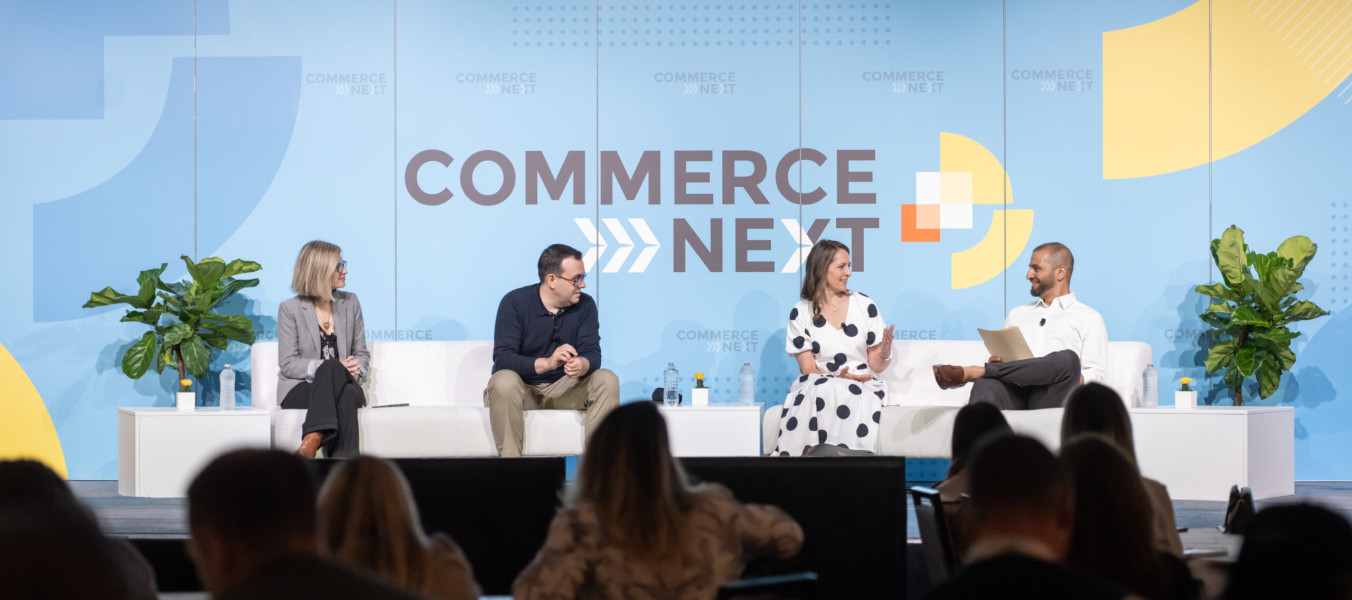
During a session at last month’s CommerceNext event in New York City, a panel retail of executives shared their philosophies for building and strengthening team and corporate culture, how to approach hiring and budgeting in an environment with finite resources, among other topics. The panel featured Sarah Henry, vice president, content, influencer, and commerce, Walmart; Jason Nickel, senior vice president, marketing, Ten Thousand; and Sarah Wallis, chief operating officer, Minted. Anish Shah, CEO, Bring Ruckus, served as the session’s moderator.
Here are some highlights from the session.
On the Future of In-Person Work
“One of the great things that we learned through the pandemic was that there are a lot things that we never considered we could do remotely that we learned we could do,” Wallis said. “I think we also learned about a lot of things that we can do remotely, but are really more effective and efficient to do in person. The opportunity is that there’s a lot more flexibility in how we structure work for our employees. The challenge is it used to be really easy: If you had an office-oriented job, you were just in the office. Everybody was treated the same. No there’s more nuance.
“When I think about our employees, I think about what is their role, what are their responsibilities, who are they as a person, what do they need, and what is the right solution for that person,” added Wallis. It becomes a little more complex and challenging. The flip side from an employee perspective is thinking through what you want to do with your career. If you have a strong opinion about whether you want to or need to work from home or work from an office, that’s one additional consideration that you never really had to think about. If you really, really want to work remotely, there’s probably some roles that aren’t right for you. And if you really want to work in the office, there are probably some other roles that are right for you.”
Nickel took a more definitive approach to his answer, noting that he’s a huge fan of hybrid work environments.
“There’s this really special opportunity for newer associates, people who are earlier in their career, to be mentored and learn some of those soft skills that can really benefit them — either remote or in office — throughout their career,” Nickel said. “It’s definitely easier to create a culture in office. I’m a big fan of giving people the flexibility.”
Building Teams in a Hybrid World
“No doubt technology has helped us succeed throughout the pandemic,” Henry noted. “It has enabled us to move quickly and have active communication, transparency, feedback. The desire is for that not to go away. But there’s also a heightened focus on building relationships in person. The intentionality behind coming together. For us, it’s about being intentional about the times that we do come together while balancing that with flexibility is super important.
“And also fostering an inclusive environment is really important,” Henry added. “Inclusivity has lots of different definitions — in this context it is really about making sure the perspectives of our teams are heard regardless of whether you are virtual or in person. Little things make a big difference. One of the things we strive to do on my team is if someone is in an office location, they are also logging into Zoom through their laptop so that everyone has equal representation on the screen. Being intentional about making sure that we understand peoples’ preferences of who does like to speak up in large settings and encouraging them to voice their opinions.”
How AI May Impact Hiring Strategies
“There’s no doubt that AI is going to change how we work,” Wallis told the audience. “We can come at it from a place of fear or we can come at it from a place of curiosity, excitement and engagement. There certainly will be roles that are completely obsolete just as the world has evolved during other eras — it’s probably been more rapid with AI. On the other hand, there are going to completely new roles that never existed before.”
Henry echoed some of Wallis’ thoughts, offering specific insights into how Walmart views AI.
“We’ve been investing in AI for years,” Henry noted. “At the end of the day, we are a people-led, tech-powered omnichannel retailer. AI has and will continue to have a role in everything that we do. We’re using AI to improve processes and experiences for customers and associates. It’s really about enabling our associates to move faster and augment their strengths.
“In terms of hiring, I don’t know that it has changed much for me. The candidates that we look for are really based on the ability to have a bias towards action, really being able to drive customer and business objectives. A working leader mentality. What’s really important, broadly at Walmart and in particular for our team, is the ability to relationship build with internal and external partners, and no amount of AI is going to solve for that. That’s a people-based function.”