Retail Leaders Address Current Industry Challenges, Solutions for Them
The retail industry has been challenged by a number of external factors in 2022, including but not limited to rising inflation, labor shortages, supply chain disruptions, online privacy regulations, among others. Furthermore, there’s the ongoing task of trying to keep pace with consumers’ rapidly evolving expectations, delivering experiences that meet and exceed them.
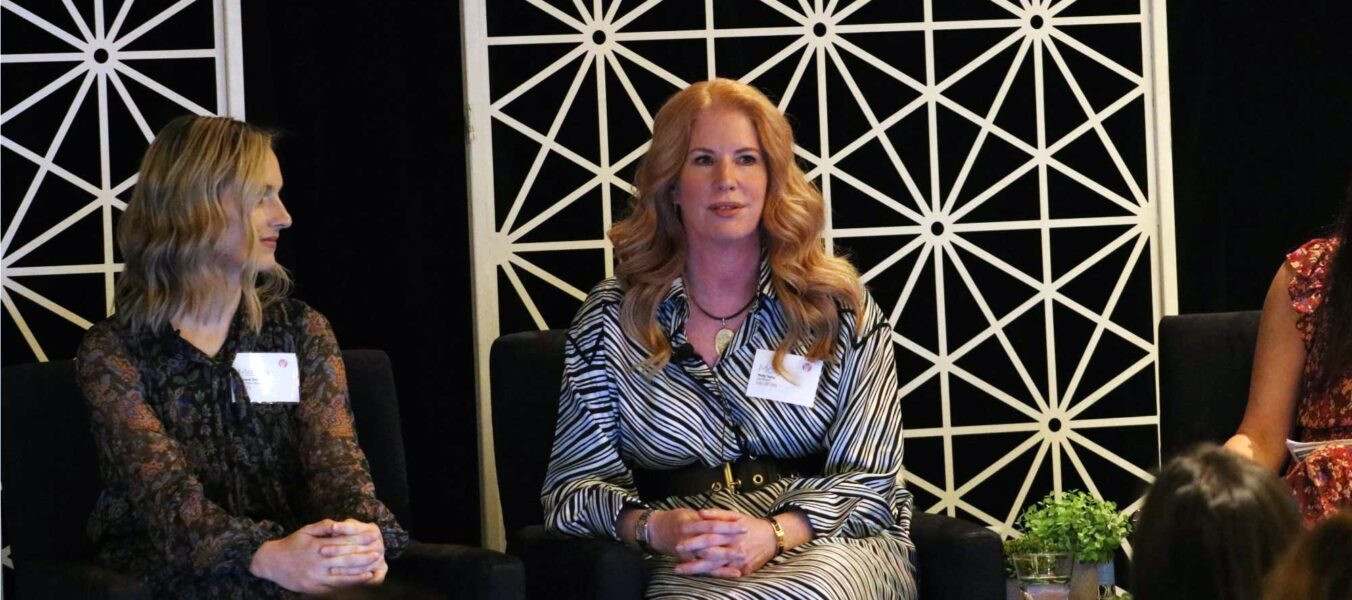
To talk about the challenges the industry is facing as well as solutions they’ve put into place within their organizations to address them, a panel of retail leaders took the stage at Women in Retail Leadership Circle’s On the Road | New York City event earlier this month. The panelists included Molly Taylor, chief merchant, Saks OFF 5TH; Melanie Zimmerman, vice president, Macy’s Media Network, Macy’s; Sarah Engel, president, January Digital; Shawuan Johnson, executive vice president/GMM, Tommy Hilfiger; and moderator Stacey Widlitz, founder, SW Retail.
Shifting Merchandising Priorities
With customer behaviors and preferences changing so much in the last two-plus years, Taylor and her team at Saks OFF 5TH have sought to accelerate their pace to deliver the products customers want in the moment.
“From sweatpants and home and comfy to noon on a Tuesday, heels and suits,” Taylor said of changing merchandise needs. “How do you manage that agility and work with your vendors to set yourself up for the future? We have a fashion-obsessed customer that expects us to track with her. We needed to make sure we had the right assortment at the right time.”
To address the challenge, Saks OFF 5th embraced transparency and authenticity, both with its customers and vendors. For example, the retailer included its product vendors in the discussion.
“This was collaborative, give-take, and at the same time from a team perspective, it’s modeling what that looks like,” said Taylor. “Telling the story and giving our team permission to own it and share it. That inclusion and development happened at the same time.”
Supply Chain Disruption
Like many other retailers and brands, Tommy Hilfiger faced significant supply chain issues over the last couple of years. Those issues impacted the brand’s product strategy and assortment vision.
“As merchants, you are thinking forward building assortments,” said Johnson. “You’re working with your visual team, your marketing team to have the assets to drive the consumer to buy into what you believe in. A lot of that started to crumble in front of us.”
In the face of this challenge, Johnson and her team at Tommy Hilfiger began focusing on the product that it did have and not what it didn’t have. While acknowledging the disappointment, it was critical that the organization figured out a path forward in spite of inventory limitations.
“It really forced all of our cross-functional teams to work closely together to figure out, ‘OK, the goods that we do know are on time, how do we reimagine the assortments?’ We thought about it one way, but now we need to rethink it. Let’s rebuild the floor set, let’s work with the marketing team, and really double-down on those essential products that are the foundation of our business.”
What Tommy Hilfiger learned during this period of disruption was that it could drive more business in its foundational essential products than it ever had before. It reported much higher AURs because it wasn’t dealing with excess inventory and overlap of assortment.
“We’ve had to work smarter, and that will stay with us,” Johnson said.
Business Diversification
Macy’s has expanded its business into media and ad sales. Brands are leveraging the department store chain’s vast audience to acquire new customers, while customers can discover new brands and products. The challenge for Macy’s, and in particular its media network team, is that it’s running out of real estate on macys.com with existing ad placements while also wanting to avoid a cluttered site experience for visitors. One solution that Macy’s has implemented is the use of video for brand advertising.
“We just launched on-site video advertising,” Zimmerman told the audience. “I’m such a believer in these interactive videos to inspire our customers and allow brands to tell their story to the highly qualified audience on our site. However, working with the merchandising team there can sometimes be tension because there is this fine balance between Macy’s and Bloomingdale’s voices and the voices of our vendors. We are continuously challenging each other to find that right balance.”
To find that right balance, Zimmerman and her team are continually having conversations with brand advertisers as well as internal stakeholders within the Macy’s organization. One such example of that balance is that when a visitor arrives on Macy’s website, he/she will see a relative mix of organic and paid ad placements.
“We also embrace the fact there will be tension,” Zimmerman noted. “As human beings we try to avoid conflict — at least I try to. We’ve accepted the fact that there will be conflict, and we need to be comfortable with that.”
Women in Retail Leadership Circle members can watch the full Solution Stories panel here, as well as session recordings from the 2022 WIRLC: On the Road events here.