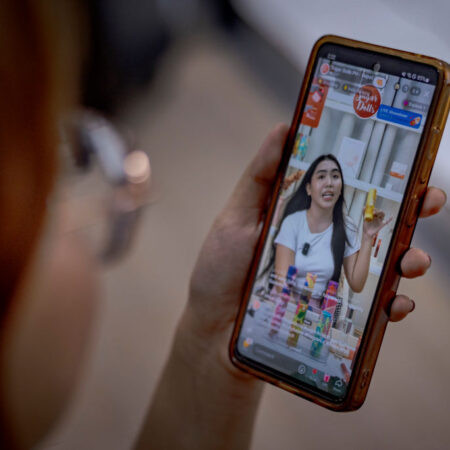
Social Commerce is Accelerating the Shift From Influencers to Ambassadors
Social commerce refers to sales on social platforms like TikTok and Instagram. Brands are increasingly seeking to capitalize on the avid attention those platforms command, bringing products directly to consumers to boost discovery, reduce friction, and drive transactions. To take advantage of social commerce, brands need to expand their social content strategies.
When many marketers think of branded social content, they think of influencers. And when they think of influencers, they likely think of celebrities with millions of followers. However, brands and retailers are increasingly turning away from celebrity influencers to create social content, instead partnering with diverse creators who are more relatable to consumers and may be experts in their fields.
We can think of this shift from celebrity content to content by everyday creators as a transition from influencers to brand ambassadors. But to fully understand what this change means for brands and retailers, let’s define “influencers” and “ambassadors,” consider why it would benefit retailers to embrace the latter, and reflect on what this shift means for the trajectory of social commerce.
Influencers vs. Brand Ambassadors
The value proposition of influencers is that they leverage, well, influence. Often, this means influencers are celebrities with hundreds of thousands or millions of followers. Even in the case of nano-influencers, it means influencers are content creators who tend to get paid for their reach or ability to expose clients to audiences of a certain size.
By contrast, brand ambassadors are everyday creators who may have follower counts as small as 1,000. The focus is not on their follower count (hence doing away altogether with the language of “nano” or “micro” influencers). Rather, the focus is on the resonance of the creator’s personal brand and audience with that of the brand or retailer they’re representing, the quality of their content, and their ability to drive transactions.
Therefore, working with a brand ambassador, and truly departing from the norms of influencer marketing, means not paying content creators based on their number of followers but on their time (like any other gig) and commissions for the sales they drive. It means working with creators who probably charge less but speak to a wide and diverse array of audiences. And it means collaborating with creators who closely follow the brand or retailer’s specifications and optimize their content to boost marketing and sales strategy, not celebrities paid to flash a handbag for a few seconds in a video.
Why it’s Time to Forget the Follower Count
When brands and retailers work with everyday ambassadors who charge less exorbitant fees than influencers but are eager to prove themselves and build an audience and client portfolio, they get representatives to whom their audiences can relate. This is especially important for brands looking to make inroads with new audiences.
For example, it’s one thing to try to get millennial mothers to buy a new product based on an unrelatable celebrity endorsement. It’s another to partner with moms in specific ZIP codes who relate directly to the fellow mothers in those locations, showing them that trusted people in their community are using a promoted product.
Furthermore, with more affordable creators, retailers and brands can atomize content, producing dozens or even hundreds of videos instead of one very expensive influencer campaign. These videos can highlight various aspects of the product, target different audiences, and leverage creators’ connections with diverse communities, helping the retailer maximize the value of its content investment and minimize risk.
Where Social Commerce is Heading
Another benefit of forgetting the follower count is that it democratizes the creator economy by shifting the emphasis of creator evaluation from mass appeal to diverse, niche, expert content that connects with targeted audiences.
Creators, many of whom are women and mothers, deserve accessible, standardized, fair-paying content opportunities that celebrate their unique perspectives and strong connections with their communities. With the move from influencers to brand ambassadors, brands and retailers can reward everyday women eager to support their favorite brands, paying for time and video quality instead of superficial reach.
Because it has tended to optimize for exposure, not impact, influencer marketing has left a bad taste in the mouths of many brands and retailers. With a focus on social commerce driven by brand ambassadors — and the commercial outcomes brand-creator partnerships drive — brands and retailers will develop social content programs that are not just more effective but more ethical, too.