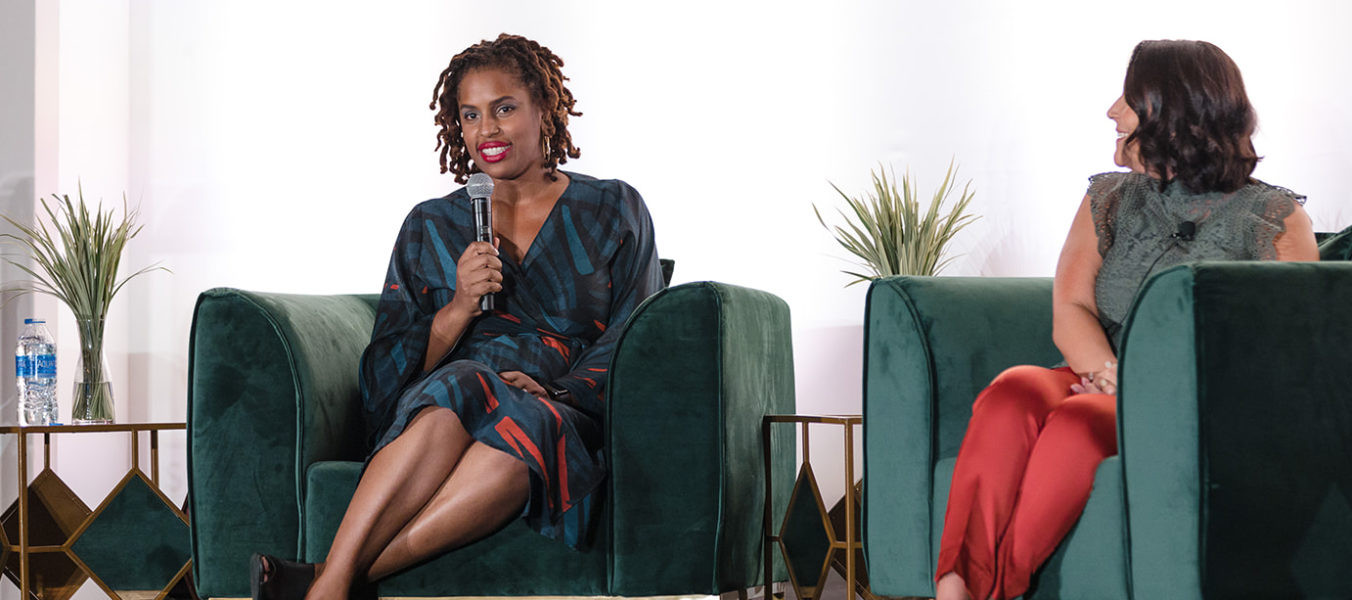
Stitch Fix DEI Director Dwetri Addy on Taking Intentional Actions for Change
A diverse workforce brings diverse viewpoints and perspectives to companies, which in turn can generate higher revenue, more innovation, better decision making, and better performance.
A panel discussion at the 2021 Women in Retail Leadership Summit examined the top ways to support inclusion and diversity within your workplace.
“If you’re a leader, you have a responsibility to lead with inclusion in absolutely everything you do,” said panel moderator Bahja Johnson, head of customer and community belonging at Gap Inc. “It’s part of your winning strategy; it’s not off to the side, it’s integral to how you’re going to win as a leader.”
Johnson asked Dwetri Addy, director of diversity, equity and inclusion (DEI) at Stitch Fix, what she has done personally and what her company has done to pivot in response to the need for positive change.
“Personally, I found ways to protect myself more,” Addy said. “When you’re doing DEI work, you have to be vulnerable, and you’re put on the frontlines of that vulnerability constantly. As a Black woman doing this work, I had to find ways to do that but also pull back, turn my camera off, protect.”
Addy said Stitch Fix’s focus on equity had been anchored on the experience of women, but if you say women generally and don’t name race, you will default to white women.
“The company has done incredibly well in terms of having more than 40 percent of the technical team (who) being women, more than 50 percent of our leadership and board are women, but it’s an overrepresentation of white and Asian women,” said Addy. “So Stitch Fix started to more explicitly name race, and explicitly talk about the intersections of gender and race. ”
For example, Stitch Fix started to report data externally in that way and break down race, as opposed to saying white people and people of color.
“We’re saying there are many different races and ethnicities embedded in what we call people of color; how do we talk about the experiences of those groups differently?”
Stitch Fix’s Elevate is a mentorship and grant program designed to acknowledge that there are systemic barriers that Black designers and designers of color have more broadly faced in getting their brands up and running and gaining an audience. The program serves to break down those barriers and supported six grantees the past year.
Addy said leaders need to do the work of saying, “Yes, we need to look at what we’re doing internally; yes, we need to publish our representation numbers; yes, we need to think about how we find designers and what barriers we may be recreating that exist out in the world, barriers that are grounded in racism and sexism. What’s our responsibility to break those down?
“It was that explicit shift from, ‘Yes we care about diversity, yes we care about equity,’ to saying, ‘What does that mean, how does that show up internally, how does that show up in how we design our product, how does that show up in our marketing, etc.?’ It’s just being more intentional.”
Women in Retail Leadership Circle members can watch a recording of this session from the 2021 Women in Retail Leadership Summit here. Not a member? Apply today!