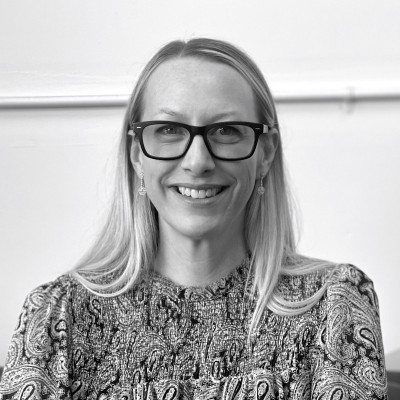
Because Market's COO on Preventing Burnout, Leading Effectively and Unplugging
Monitoring workloads isn’t always possible. When you’re leading a team, it’s your job to make sure your team is working at full capacity. However, there are times when people need time away from their work — and even if you’re monitoring their performance, you can’t always tell when that time is coming.
Heidi Robinson, chief operating officer of Because Market, a direct-to-consumer personal care brand, has created an environment where employees feel comfortable taking the time they need to recharge. Below she shares tips for effective leadership, preventing burnout, and how she unplugs at the end of the day.
Eric Netsch: Please share a bit about your background and what you do in your role.
Heidi Robinson: I started out in investment banking but always gravitated towards operating roles, and made the transition pretty quickly to merchandising and general management roles at retail and consumer companies. Over the years I’ve been fortunate to lead businesses at Restoration Hardware, Old Navy, and JC Penney. Today as COO of Because Market, I’m responsible for making sure that we deliver best-in-class products, exceptional customer service, and an intuitive customer experience. Older adults are a hugely underserved demographic and my job is to help change that by putting them at the center of everything we do.
EN: What are your daily non-negotiables that keep you mentally healthy?
HR: Walking has always helped me relax, process big decisions, and brainstorm. Even if it’s just a few laps around the block, I always take a walk during the day. I also try to prioritize sleep. I do much better with at least seven hours of sleep!
EN: How do you unplug at the end of the day?
HR: I have two little kids and they’re pretty good at literally unplugging my computer around 5:30 p.m. I make dinner and we hang out and talk, read books, and then I put them to bed. Having kids has actually made me more productive during the day which lets me enjoy the early evenings, even if my laptop may come out after they are in bed.
EN: What are some of the tell-tale signs that someone on your team doesn’t align with your company culture?
HR: As a startup, we’re moving quickly and most team members are genuinely curious and eager to figure things out and learn. In order to be successful, you need to be open to testing, questioning assumptions, failing, and learning. If someone approaches ideas with “no, we can’t do that” or “no, that won’t work” they’re probably not a fit.
EN: How can you create an environment that supports constructive conflict between team members?
HR: As an executive team, we try to model the behavior that we want to see from our team. We have respect for one another and there’s a level of trust there so that even if we disagree or have a heated moment or two we always find a productive way forward. As a leader, I think it’s also important to ask lots of questions to elicit different perspectives that may be in conflict. This provides an opportunity for us all to work together toward the best outcome.
EN: In order to prevent your team from burnout, how do you monitor workloads?
HR: We’re very proud that our startup is officially five years old now. Having made it to this point through a pandemic and uncertain economic times, we know that burnout is real. Monitoring workloads isn’t always possible, so we’re trying to create an environment where people feel comfortable taking the time they need to recharge. We’ve also implemented certain days as companywide days off outside of just the major holidays so that once you’ve recharged, you don’t automatically come back to an overflowing inbox.
EN: What practices or boundaries have you implemented in your personal life to create more work/life balance?
HR: What works for me is viewing it more as a work/life blend. While work may seep into nights or weekends, life also often seeps into the work day. Some days I will go to a midday workout class or pick my daughter up at 3 p.m. to have a fun afternoon together. It’s a bit messy at times but right now I’m OK with how it’s working.
EN: What strategies do you recommend team members implement in their own lives to create more balance?
HR: Everyone’s lives look a bit different depending on their exact job responsibilities, interests, family life, etc. I always recommend that my team think about what’s most important to them and in their lives outside of work and protect those things. I’ve learned over the years that no one else is going to do that for you!
EN: Can you share the top five books that have transformed or inspired your leadership approach?
HR:
- “Dare to Lead” by Brene Brown
- “Radical Candor” by Kim Scott
- “The Hard Thing About Hard Things” by Ben Horowitz
- “This Innovator’s Dilemma” by Clayton Christensen
- “Measure What Matters: OKRs” by John Doerr
EN: What show(s) are you currently binging?
HR: I just finished “WeCrashed” and “Super Pumped,” which both felt like required viewing for a startup!
EN: Do you currently have a mobile app for your store? If not, why?
HR: We don’t have a mobile app today, but it’s something we’re considering down the road. As a lean team, we need to be ruthless about prioritizing and a mobile app isn’t at the top of the list for now.
EN: What is your most successful way to reach consumers?
HR: Our customers tend to be 65-plus and today’s older adults are breaking boundaries when it comes to being digitally savvy. Digital channels are the primary way that we’re reaching our customers. The pandemic certainly expedited the adoption curve as older adults turned to online channels to maintain connections with family and loved ones, and that behavior has definitely stuck. Most of our communications and outreach are happening online because older adults are spending more and more time online.
EN: What are currently your biggest marketing hurdles?
HR: Older adults are an incredibly diverse demographic to reach and keep engaged. While many marketers may tend to think about older adults as a homogenous group of retirees, we know that in reality, this demographic consists of dozens of different segments. Their lifestyles, attitudes and needs all vary greatly and a one-size-fits-all strategy doesn’t necessarily work. Connecting the dots between the right message and the right person at an efficient spend is the continuous hurdle we’re chasing.
EN: What’s your most effective marketing channel?
HR: Like so many companies, we rely heavily on social media to communicate with our customers and prospects. That said, we’ve also found success in direct channels like email marketing and offline channels like direct mail and print. We’re constantly testing new ways to reach our customers and making it as easy as possible for them to find us.
EN: From your perspective, what’s going on in your industry that might not be obvious to everyone?
HR: What I often hear from our customers is that they might be 60 or 70 or 85, but they don’t feel “old.” Their needs may be changing, they might be retired, and perhaps their mobility is declining, but they don’t understand why they’re being ignored by brands. Older adults control 80 percent of household wealth in the U.S. and companies are only now starting to pay attention. If brands were smart they would lavish the same amount of attention (and marketing dollars!) on older adults as they do on millennials.
EN: What are the business goals you’re hoping to achieve in 2023?
HR: One of our overarching goals is to meet customers where they are. In 2023, we hope to expand our distribution into even more retail stores and retirement communities in addition to our strong presence on Amazon.com and BecauseMarket.com. We also have some exciting products and services in the pipeline that will launch and further our broader goal of becoming the No. 1 trusted brand for older adults.